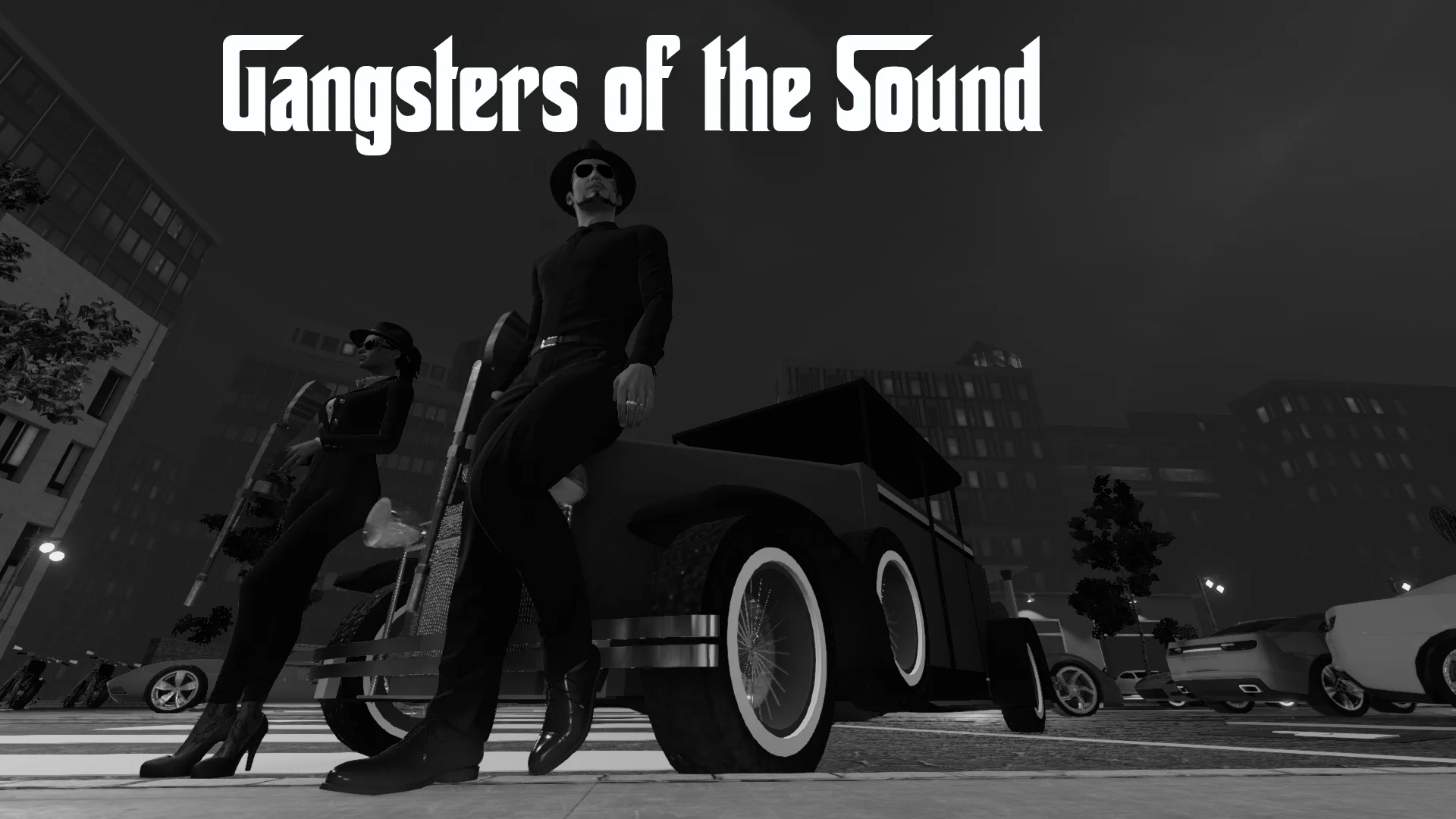
Architecture from Pixels and Pure Craftsmanship
More than 50 clubs, five years of building, and countless hours spent turning simple shapes into extraordinary virtual spaces. For Amy Le and Don Koyote, the duo behind Gangsters of the Sound, creating a club in 3DXChat involves far more than putting together a dance floor and a stage. It is a combination of architectural craftsmanship, technical ingenuity, and a carefully planned entertainment experience.
Amy is responsible for much of the architectural work, painstakingly creating everything from elaborate buildings to the smallest decorative details. Don contributes his own creations while managing events, coordinating performers, and making sure the rooms work just as well when filled with guests as they do in the editor.
The Hidden Circle Gazette spoke with Amy and Don about their creative process, the evolution of their building techniques, their spectacular annual Christmas projects, and why sometimes the hardest part of creating something beautiful is knowing when to let it go.
Amy, how long have you actually been building rooms, and how do you view your development over the years?
Amy Le: For over five years now, I’ve been shaping rooms out of nothing in the virtual world of 3DXChat. Together with my partner Don Koyote, the manager and event planner of our duo, we form the "Gangsters of the Sound."
What has emerged during this time isn't just backdrops for digital parties, but detail-loving, handmade architectural projects that are subject to constant evolution. Even today, after all these years and more than 50 completed clubs, I keep learning with every new room. It never stops, and that’s what’s so great about it.
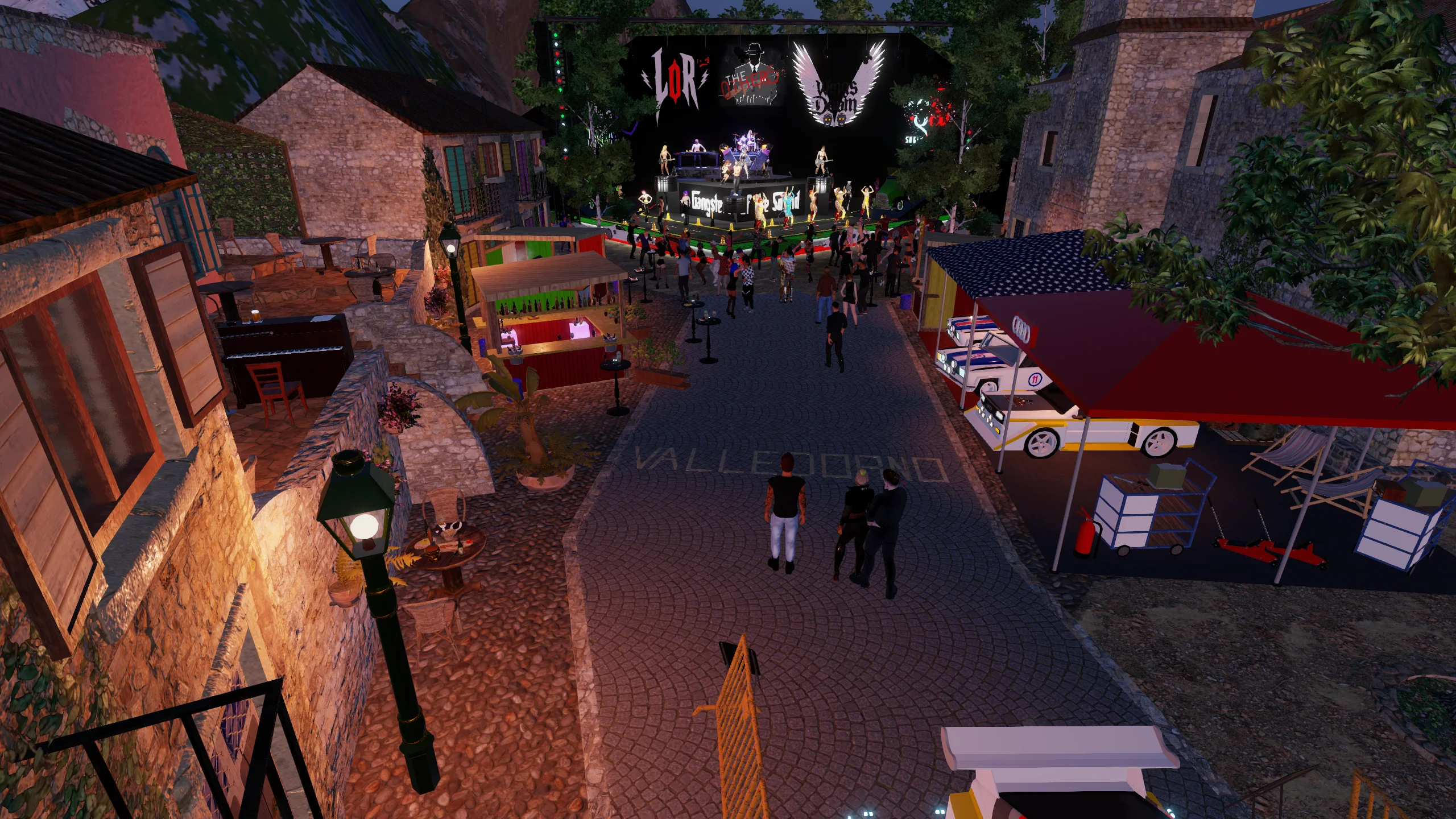
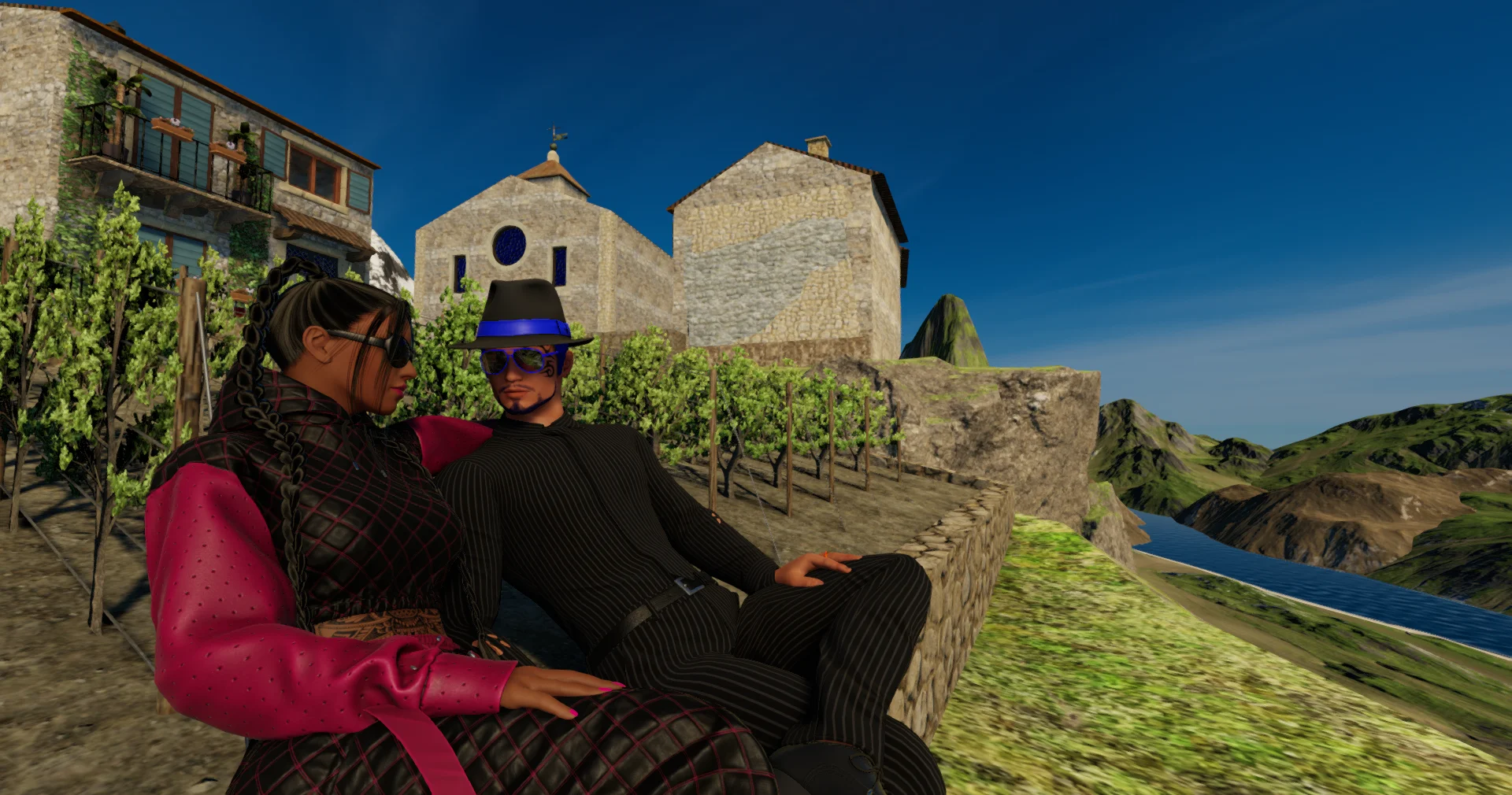
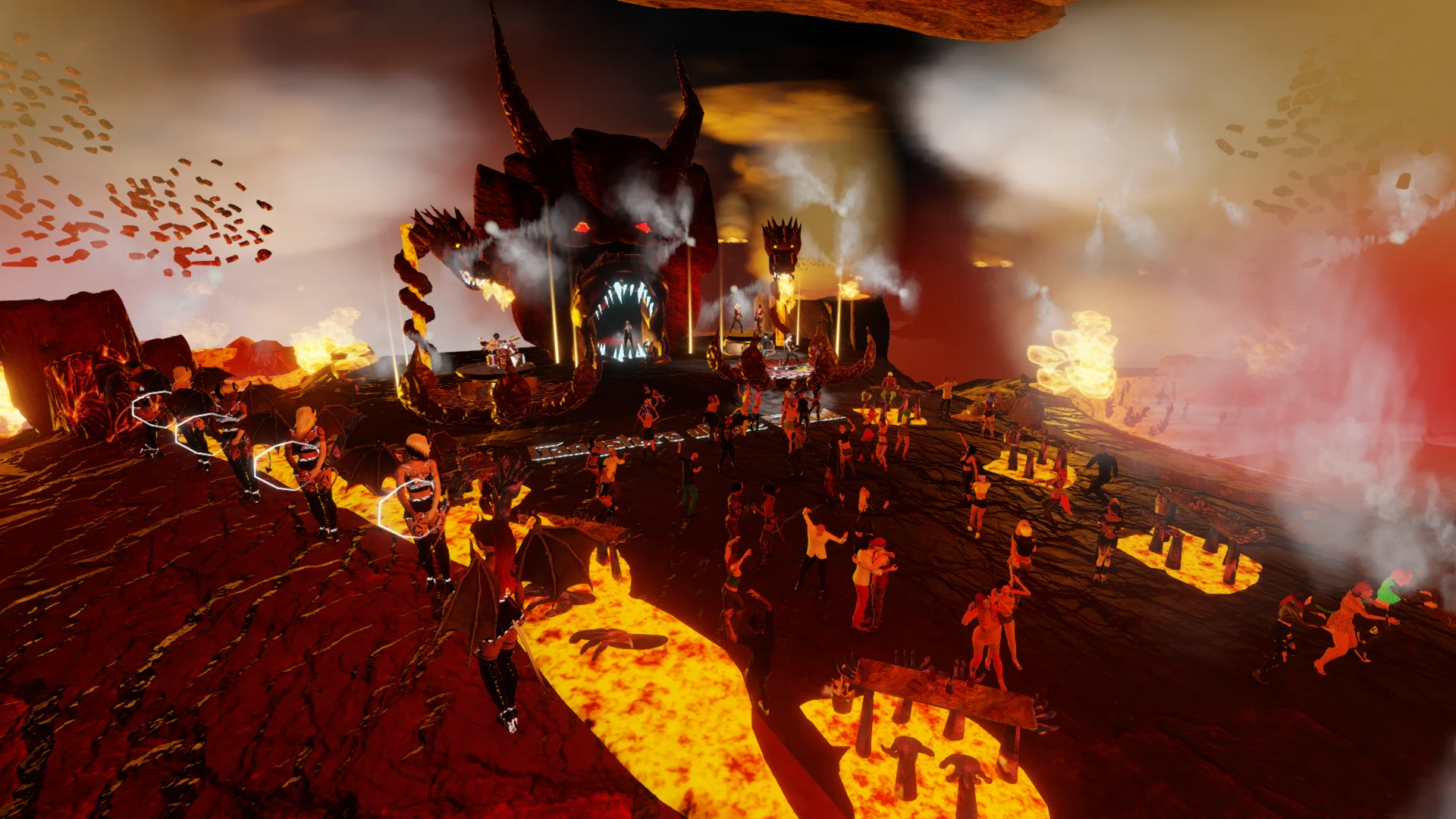
Is there a room from your early days that was particularly important for this learning curve?
Amy Le: An absolute milestone for us was 2021 with the Christmas room Peakville, a snowy mountain village. From today's perspective, the construction might seem a bit simple, but that’s where the journey into more complex structures began.
I learned a tremendous amount about lighting, special effects, but also about room size. Back then, we had to realize that 6-megabyte rooms cause massive performance issues. Today we know: a file size of 2.5 to a maximum of 3 megabytes is the reasonable limit.
Don Koyote, as the manager and event planner, how do you handle these technical constraints and the schedule when launching a new club?
Don Koyote: It’s a delicate balance. While Amy works her magic to keep things under that crucial 3-megabyte limit, my job is to make sure the space actually works for a live crowd.
When we plan a room, I always keep the flow of the party in mind: where the bottlenecks might happen, how the dance floor interacts with the stage, and how visitors will move around. Managing the calendar is also part of that rhythm. We carefully decide which rooms host our events every Tuesday and Friday to give each space its moment in the spotlight before we move on.
What exactly does the planning process look like with such limitations? Do you just build wildly, or is there a set procedure?
Amy Le: Once Don and I have fleshed out an idea, we usually start with a Trello board. There we write down everything that needs to be in the room: a bar, a stage for the band and dancers, a dance floor for the guests, and how large the club should be overall.
Then I start marking the individual areas in the editor using simple flat shapes. This is important to get a feel for the right scale. Once that fits, I start with the first construction phase; sometimes it’s the bar, sometimes the stage. During the building phase, lighting and textures change every now and then. That’s normal, I just test what goes best together.
Don, besides coordinating the logistics and the calendar, you also build various decorative pieces, from auxiliary bars to parts of the decor, including your iconic annual Christmas trees. How do you approach that craft?
Don Koyote: Exactly. It's not always about building massive centerpieces, but about layering authentic details. In our Christmas rooms, for instance, the trees are always mine, and in other venues I usually craft anything from smaller decor parts to auxiliary bars.
I love diving into the editor to build elements of all sizes that fit seamlessly into the club's atmosphere. It's my way of ensuring the environment has that physical, handcrafted touch in every corner.
Your annual Christmas rooms are legendary and have a new theme every year. Can you give us some concrete examples from the past?
Amy Le: In 2022, we had the crazy idea to build a giant's living room. The giant wasn't there, just his lazy dog Otto. As a visitor, you jumped over a gigantic coffee table and the remote control straight into the TV, where the actual party was raging.
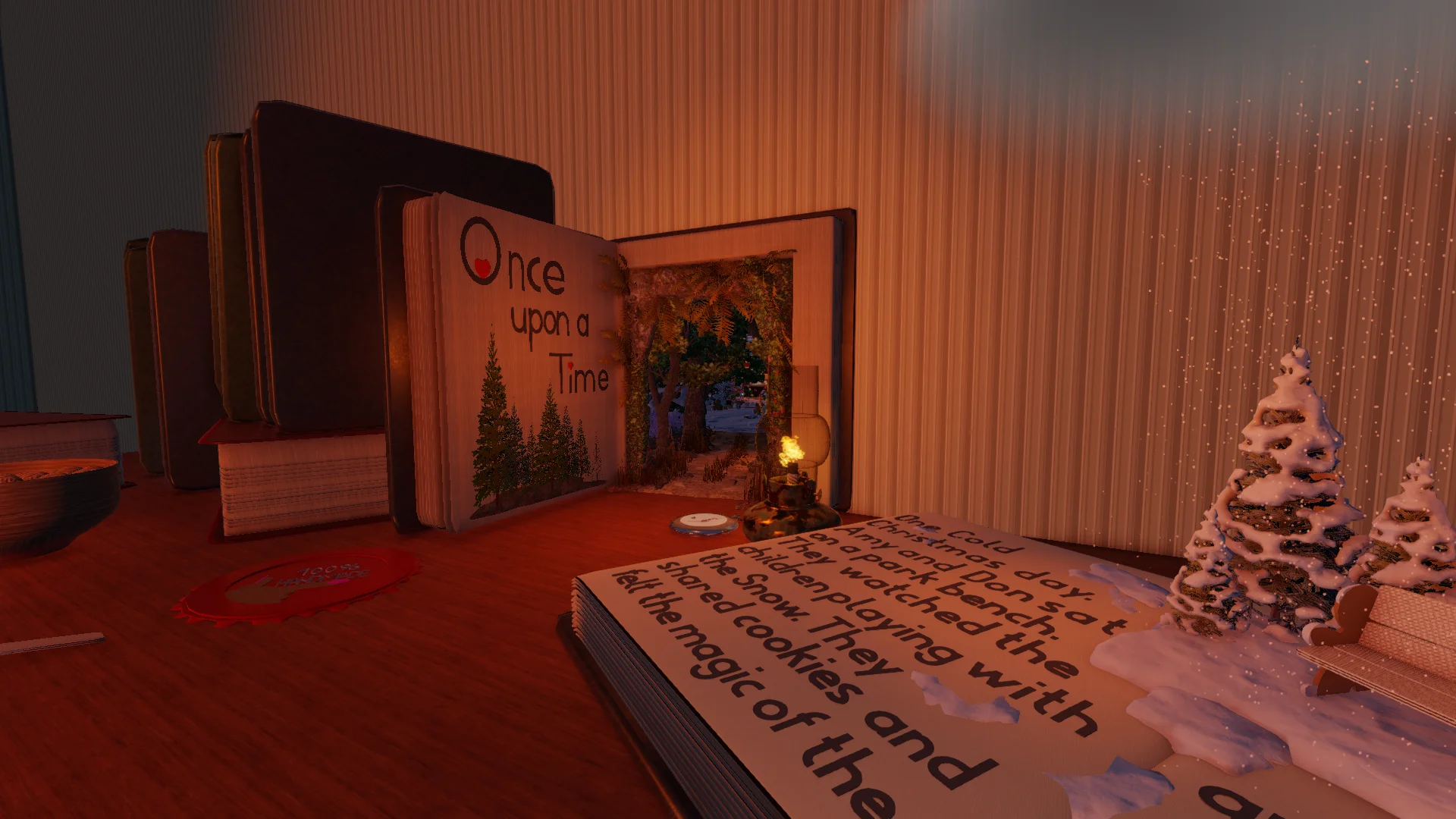
An absolute highlight, however, was the 2024 Christmas party with Once Upon A Time: Christmastale. We were back in the giant's room, but this time guests walked across an open book on the table, read the lines of a story, and stepped through another gigantic book on the wall directly into an interactive Christmas fairytale.
At the end of the year, the plug is pulled on these Christmas rooms forever. Is this goodbye difficult for you after hundreds of hours of work?
Amy Le: It’s difficult for me with every room, because I know exactly how much work goes into it. But it's exactly this ephemeral nature that makes it special. It makes you look forward even more to what comes next.
Besides, the hard work doesn't disappear without a trace. Insights from the construction style, specific buildings, or even just detailed bar stools often flow invisibly into our new, permanent projects.
How does the brainstorming process work between you and Don Koyote? Do the ideas come spontaneously or from real life?
Amy Le: That varies completely. Sometimes it’s spontaneous brainstorming where one of us drops an idea and suddenly it clicks. But often it's also events from real life.
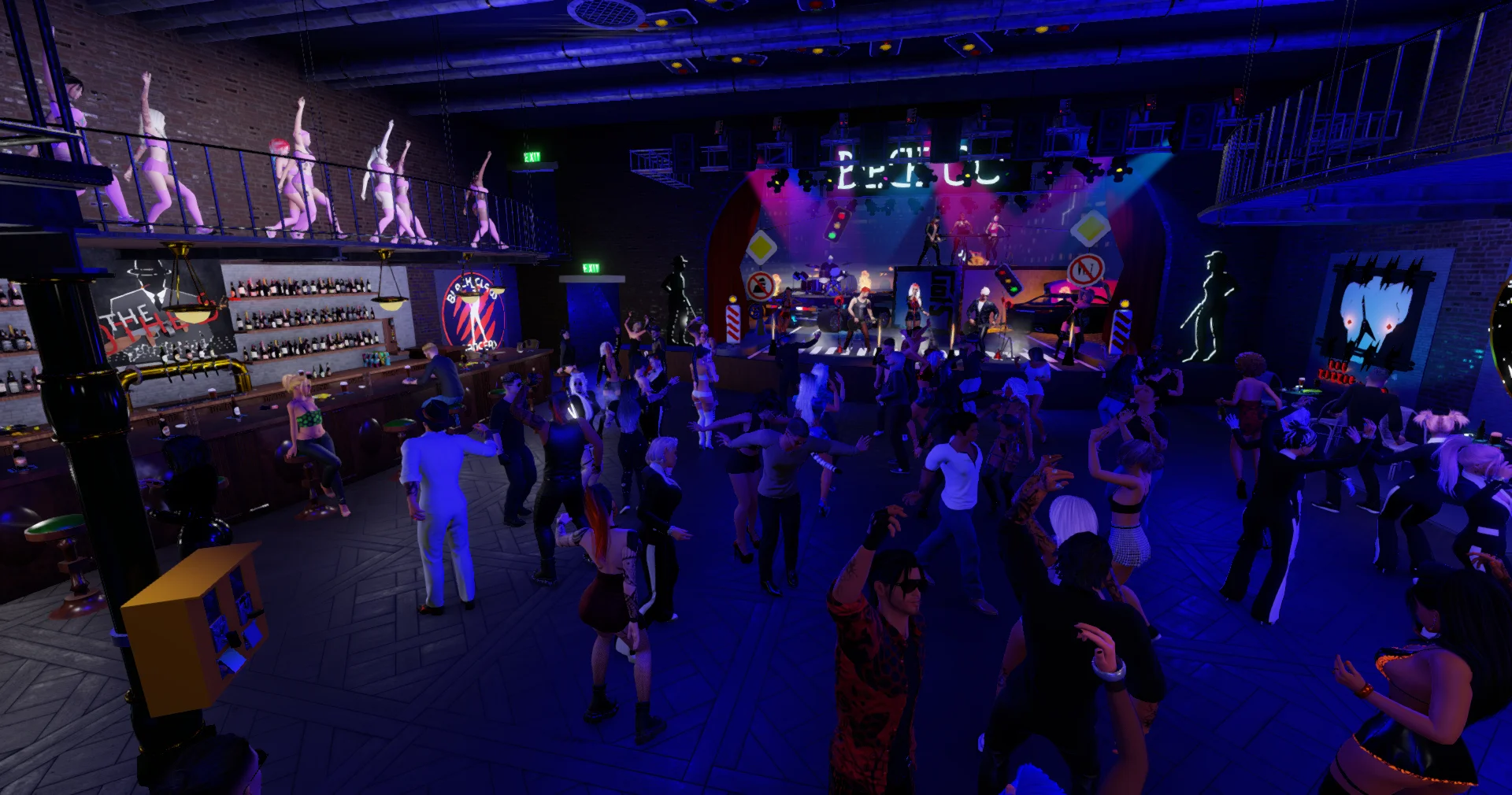
Our club Blackout, for example, was inspired by the power outages in Spain and France. One evening, Don wrote to me on Discord that he had no power and couldn't come online. That sparked the idea for a pitch-black little street where pulsating life rages behind its doors, including a massive stage for bands, which is unique in 3DXChat.
We like breaking conventions anyway, putting bands and dancers together on large stages, or moving the bar entirely to the center of attention.
Don, when it comes to bringing these spaces to life on Tuesdays and Fridays, how do you curate the entertainment, the DJs, live bands, and dance groups?
Don Koyote: For me, booking the right acts is just as important as the physical build. I look for consistency, high energy, and artists who know how to engage a virtual crowd.
Whether we’re booking heavy rock bands, electronic DJs, or synchronized dance troupes, they need to feel the synergy of the room. When a band hits the stage and the dancers sync up with the lighting Amy designed, that’s when the club truly breathes.
Curating those Tuesday and Friday lineups is about turning an architectural space into an unforgettable living experience.
You’ve built over 50 clubs by now, but hardly use the older ones anymore. Why is that?
Amy Le: That has a radical, qualitative reason: For about three years now, I’ve been building absolutely everything 100 percent myself. If there’s supposed to be a cocktail glass on a table, it’s modeled from scratch. If a cell phone needs to ring, it's created purely by hand.
I don't use any prefabricated text tools and I don't download anything from others. That's why each of these newer rooms receives our in-house "100% Handmade" badge.
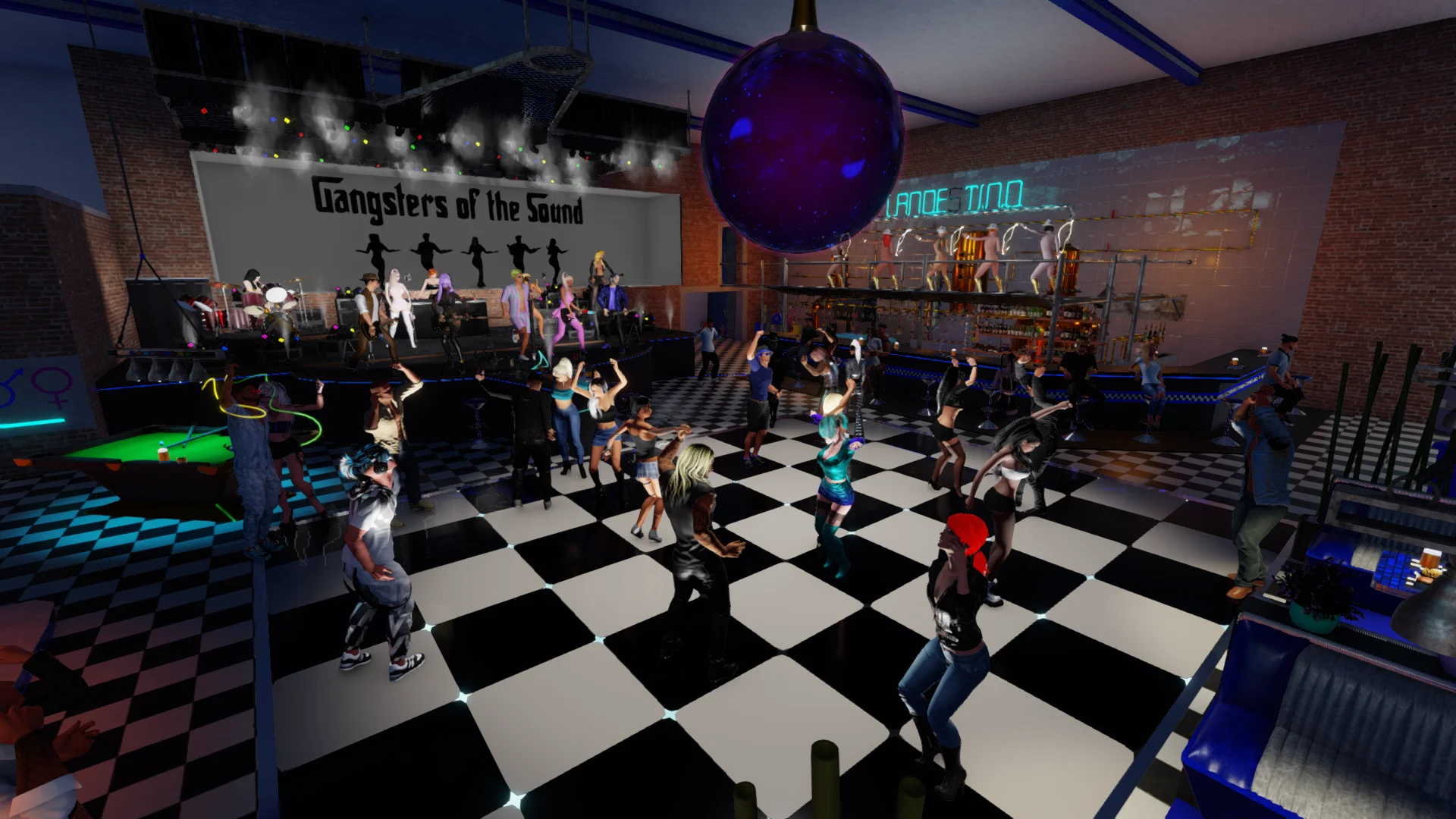
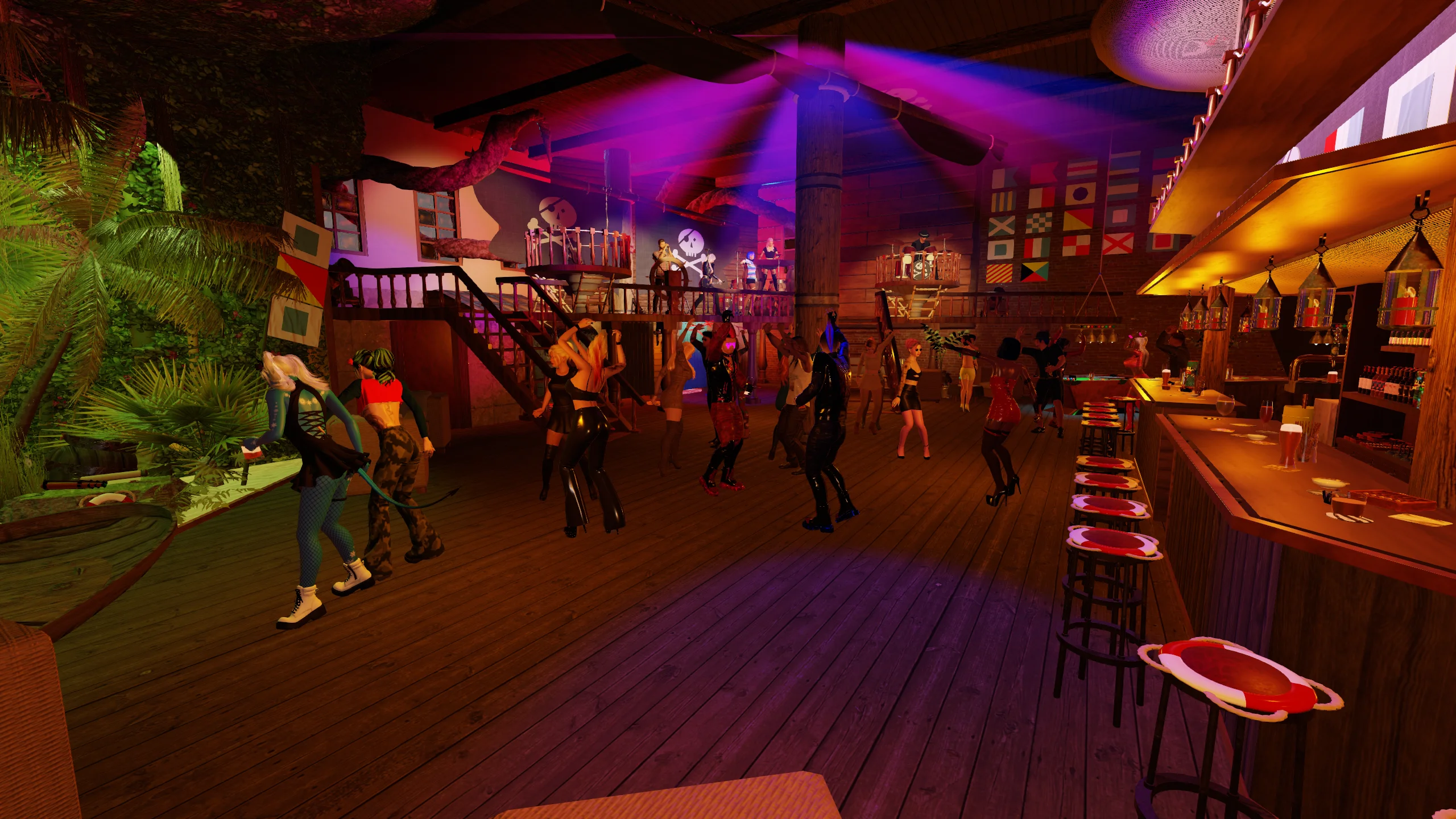
If truly everything from the cocktail glass to the building is 100 percent handmade, how long does it take until such a room is finished?
Amy Le: For a complex room that ends up around 2.5 megabytes in size, I need about a month on average. But that can vary depending on whether I'm in the flow or not.
There are phases where I can't build at all because I just can't get into the zone. But once I am in it, it usually goes very fast, since I’m already running through a plan in my mind of exactly how I’m going to build something.
Among all these handmade rooms, is there a permanent club that you are particularly proud of?
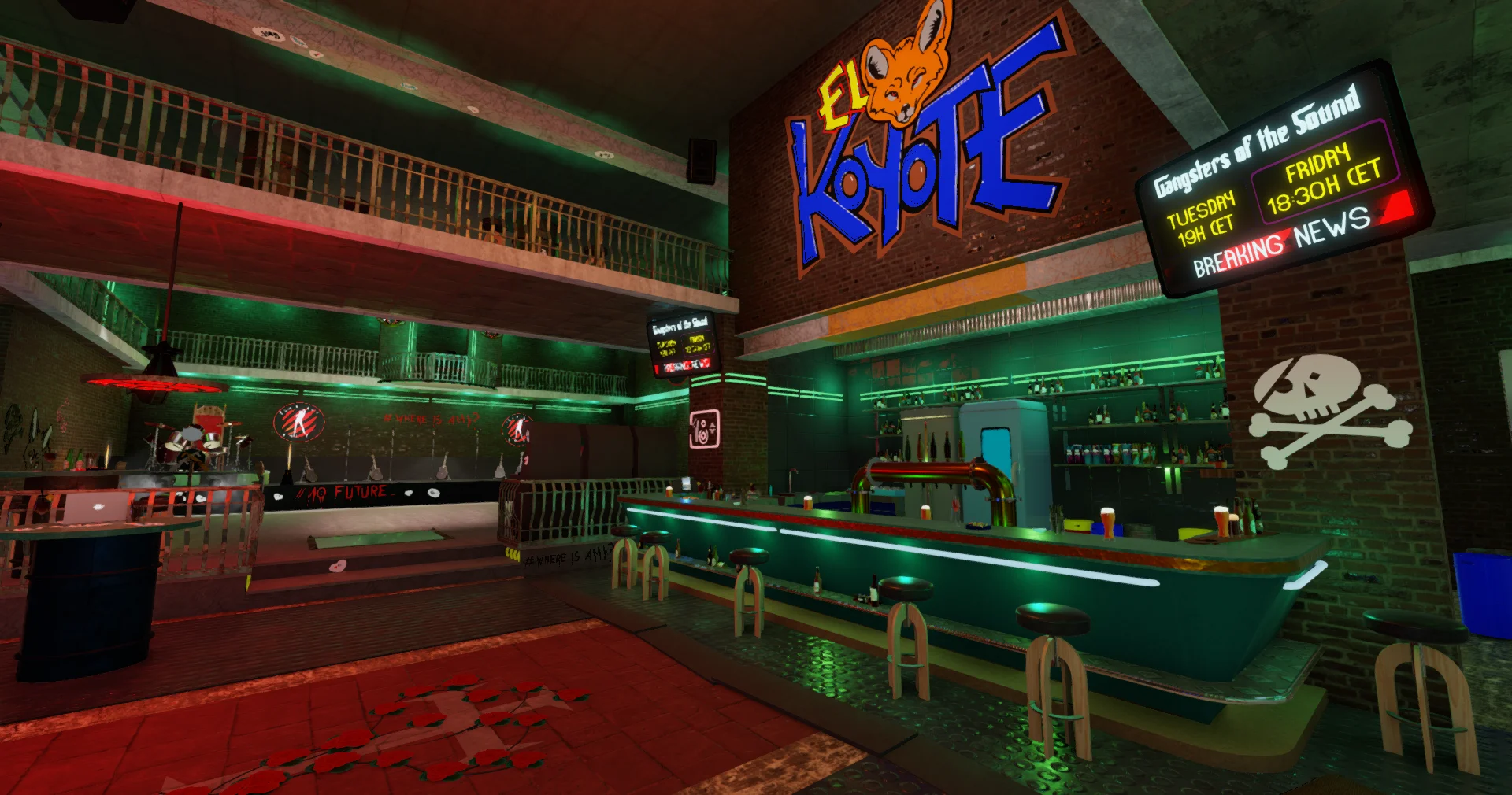
Amy Le: For me, El Koyote is the absolute masterpiece. Drawing inspiration from "El Coyote" in the video game Cyberpunk 2077, I created a highly detailed world here. Every piece of graffiti, no matter how small, and every complex play of light is pure handiwork.
It was an immense architectural challenge to combine this enormous level of detail with smooth performance. This room impressively proves that we at "Gangsters of the Sound" don't just build virtual clubs, but create digital craftsmanship.
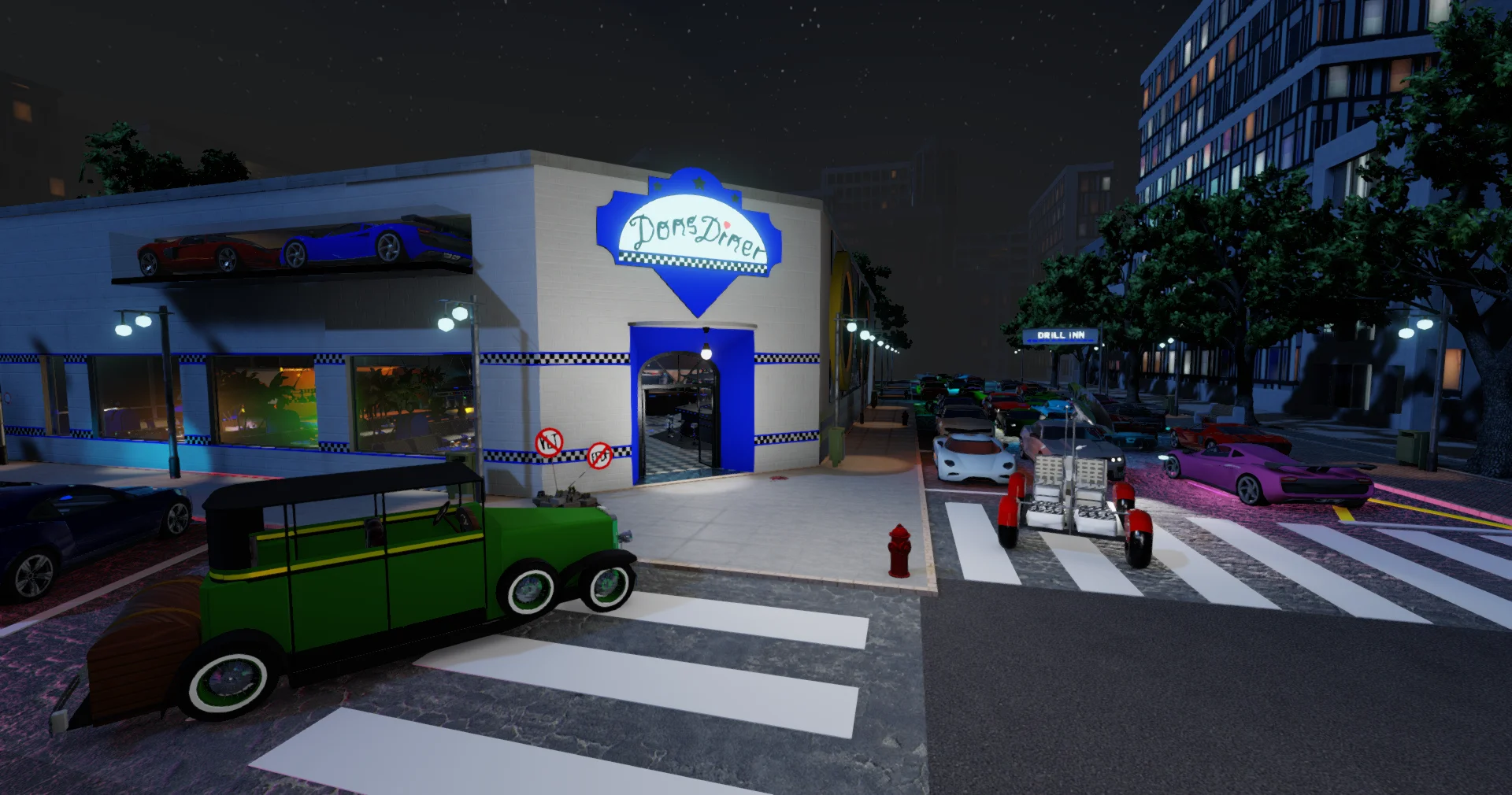
Don Koyote: The room I'm proudest of is Don's Diner. It's a birthday gift, like many other rooms, but that was the first one.
Clandestino is a room that really fits our gangster game, featuring an office and a hidden club where anything forbidden is welcome. And Blackout was a fun room to build and use, with a great lighting setup and spaces where people really have a good time.
After over five years of building and so much experience, what would you wish for the future of 3DXChat?
Amy Le: For the editor, I wish for scalable and rotatable textures. If we ever get that, you'll have made me absolutely happy. Beyond that, I’d like to see more poses for the bands and more instruments.
And a very important wish for the community would be to turn off the "People Count" in the room list. That would make things much fairer for the lesser-known rooms. Most people simply jump to wherever the most people are. If I don't see that number anymore, I have to think: What sounds interesting? A general sorting by genre would be great, too.
Don Koyote: And from an event organizer's perspective, I completely echo that. Giving creators and lesser-known venues a level playing field without the distraction of crowd counters would breathe so much fresh air into our community parties.
We want people exploring spaces because they love the vibe and the curation, not just following the herd!
To close things out: what are you working on at the moment?
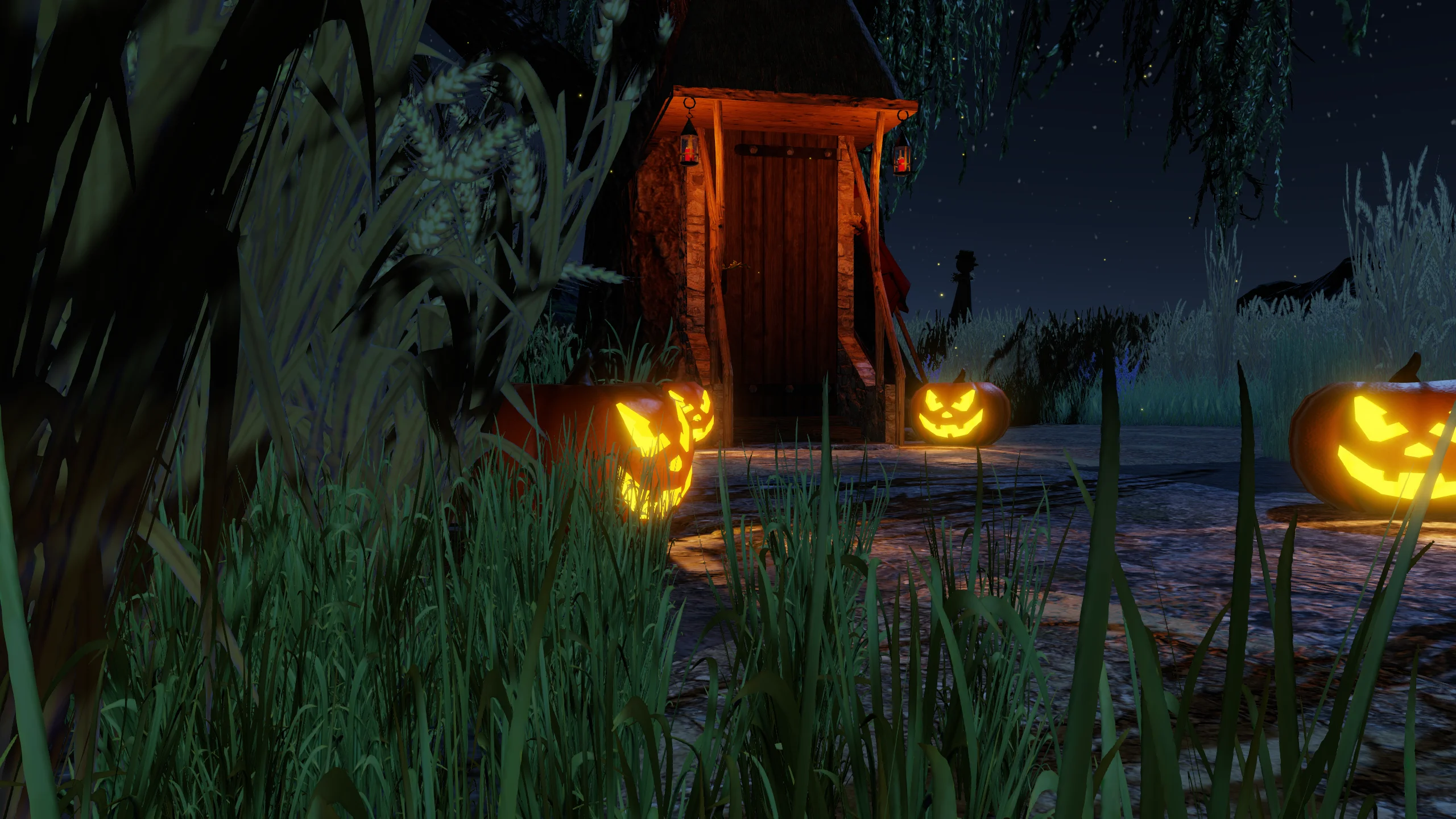
Don Koyote: We’re actually just adding the finishing touches to the Halloween room and getting the ball rolling for Christmas. The theme is set and the build is well underway, but it’s top secret! We’re launching it on October 30th. It doubles as my birthday party, so you're all invited!
For Amy Le and Don Koyote, a successful club is not simply measured by the number of visitors passing through its doors. It is the result of countless decisions about design, atmosphere, performance, and the experience of the people who gather there. Their work illustrates how much creativity can be squeezed out of the relatively modest tools available to builders in 3DXChat, provided someone is willing to invest the time and patience.
Perhaps the most interesting aspect of their approach is their willingness to move on. Rooms that required hundreds of hours to create may eventually disappear, but the experience gained from building them carries forward into the next project. With more than 50 clubs behind them and no shortage of ideas for the future, the Gangsters of the Sound clearly have no intention of putting down their building tools anytime soon.
— 30 —
0 Comments
No comments yet.
Leave a comment
Your email is optional and never shown. Comments are checked for spam; posts from readers with scripting disabled are held for a moderator.